
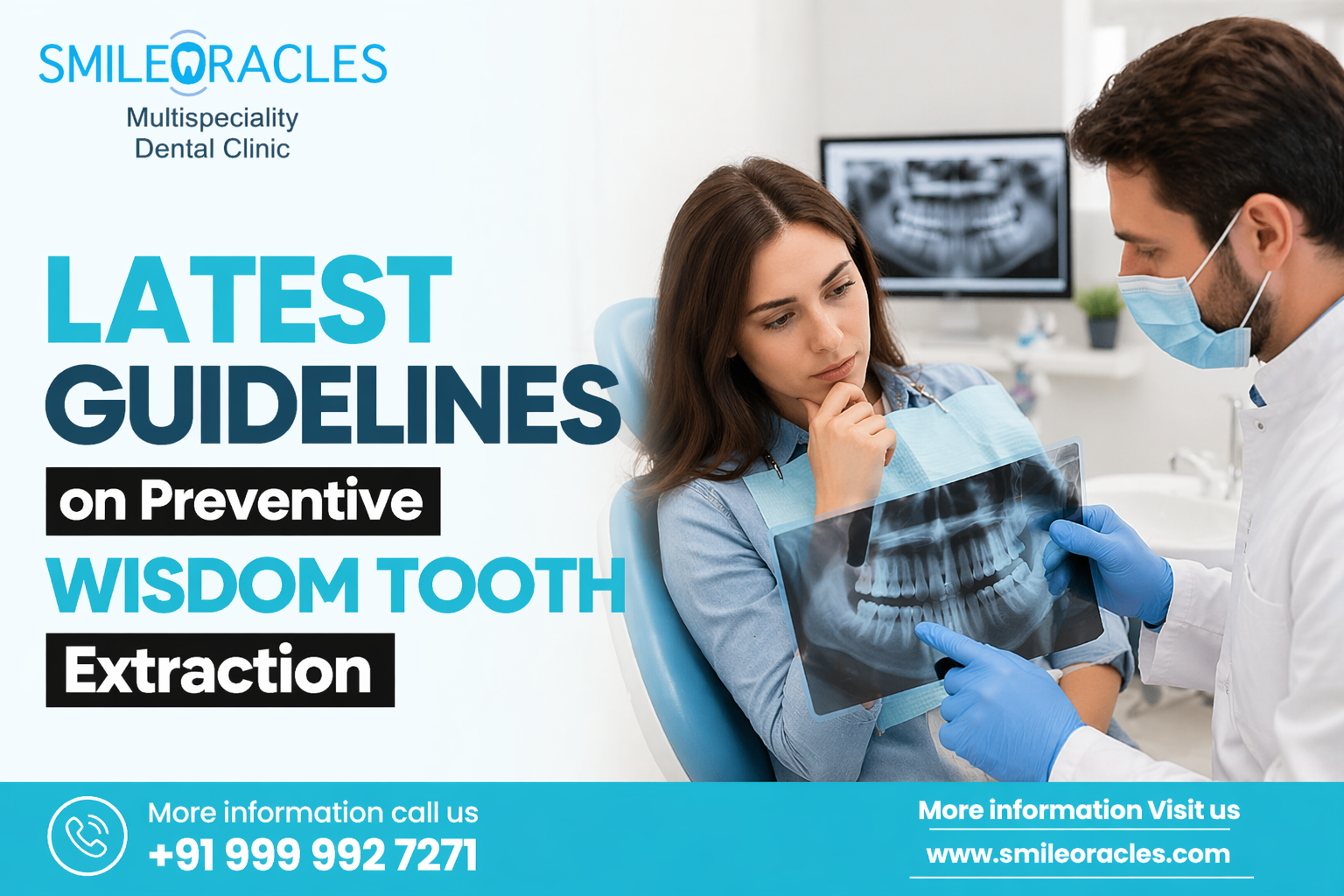
For years, wisdom tooth removal has been recommended as a routine preventive measure. The primary goal is to avoid potential problems from developing in the future.
But this is no longer the case. The dental industry has evolved vastly, and preventive removal is no longer obvious advice for everyone. Today, doctors recommend the treatment approach after careful evaluation, discussion of symptoms, and consideration of the risk of future complications.
This blog explains the latest guidelines on preventive wisdom tooth extraction.
What Is Preventive (Prophylactic) Wisdom Tooth Extraction?
Also known as prophylactic wisdom tooth extraction, it refers to removing wisdom teeth before they start causing pain, infection, or other noticeable symptoms. The goal of this procedure is to avoid potential complications later.
Unlike before, when it was most commonly and obviously recommended to remove healthy or asymptomatic wisdom teeth, this is no longer the case today. The present dental practices follow a clear evaluation of the tooth that is likely to cause problems in the future.
Tooth position, oral hygiene, and the risk of complications are among the factors most dentists consider before recommending preventive removal.
What Do the Latest Guidelines Say?
The latest dental guidelines suggest that wisdom teeth should not be removed as they were in the past, even if they are healthy and not causing any problems. As per the latest guidelines, preventive extraction is not recommended for everyone; instead, it focuses on a more selective, evidence-based approach.
Wisdom tooth removal is usually advised only when there are clear signs of disease, such as infection, decay, damage to nearby teeth, or a high risk of complications. On the other hand, when wisdom teeth are properly aligned and can be maintained with proper oral hygiene, regular monitoring can help.
This way, unnecessary procedures are avoided, and removal is only recommended when there is a clear clinical need.
When May Preventive Removal Be Recommended?
The following are some of the common reasons why preventive removal is recommended:
Impacted Teeth with Risk of Infection
The risk of infection increases when partially or fully impacted wisdom teeth can trap bacteria and food. Early removal is often recommended to help prevent repeated issues.
Difficulty in Cleaning Leading to Decay
If it makes it difficult to clean wisdom teeth properly, it can lead to plaque buildup, cavities, or gum problems over time.
Pressure on Adjacent Teeth
A misaligned wisdom tooth may push against nearby teeth. This is what causes discomfort, affects alignment, and also avoids further complications.
Recurrent Gum Infections
Early removal is often recommended when there is persistent or repeated swelling, pain, or infection around the wisdom tooth area.
Risk of Cysts or Damage
In some severe cases, impacted wisdom teeth may also lead to cyst formation or damage to surrounding bone and teeth. In such cases, preventive wisdom tooth extraction becomes essential.
When Removal May NOT Be Necessary
Wisdom tooth removal is not always necessary. The situations include:
- If they are fully erupted.
- They are properly aligned.
- They are not causing any discomfort or damage.
- They are easy to clean and do not trap food or bacteria.
- Good oral hygiene and regular dental check-ups are enough.
Role of Regular Monitoring and Dental Check-Ups
Regular visits to your dentist are important for managing wisdom teeth. It is even more crucial when they are not causing any immediate problems. These check-ups with your dentist can help monitor their position, growth, and surrounding gum health over time.
Additionally, undergoing periodic dental X-rays can help detect early signs of issues such as decay, infection, or pressure on nearby teeth. This allows you to get timely treatment before symptoms become severe.
Age Factor: When Timing Matters
While age is not the only deciding factor, it plays a crucial role in influencing how wisdom teeth are managed.
This is what it actually looks like:
- At a younger age, the roots of wisdom teeth are not fully developed. This makes extraction simpler and recovery quicker if removal is required.
- In older age, on the other hand, removal can be slightly more complex if required. It is because they now have fully developed roots and slower healing.
Still, the decisions are not based on age; they are made after careful evaluation of symptoms and risk factors, rather than age alone.
Conclusion
The latest guidelines on preventive wisdom tooth extraction have changed the approach. It is now more selective and made on a case-by-case basis. Now, some wisdom teeth do not need to be removed, especially if they are healthy and do not cause any issues.
Regular monitoring, timely evaluations, and personalised treatment decisions are the keys to managing your wisdom teeth effectively. A detailed consultation with an expert dentist can help determine whether removal is necessary.
Frequently Asked Questions
-
Should I remove wisdom teeth if they are not causing pain?
No. It is not necessary to remove wisdom teeth if there is pain or signs of disease, risk, or future complications.
-
Can wisdom teeth cause problems even without symptoms?
Yes. It is normal to see issues such as decay or damage in nearby teeth. This often develops silently, but regular dental check-ups can help avoid it.
-
How often should wisdom teeth be checked?
It is best to have dental visits and routine X-rays periodically, every 6 to 12 months, to ensure no issues are developing.
-
Is it better to remove wisdom teeth at a younger age?
Wisdom tooth removal can be simpler at a younger age. However, it should only be removed when clinically necessary.
-
Can impacted wisdom teeth remain without treatment?
Wisdom teeth can remain without treatment when they are not causing problems. Still, a regular evaluation is needed.
-
What are the risks of not removing a problematic wisdom tooth?
Leaving wisdom teeth untreated can lead to infection, pain, damage to nearby teeth, or even more complex problems over time.